2026-11-03 · Carlos Rivera
Spotting Hidden Moisture in Older San Antonio Homes
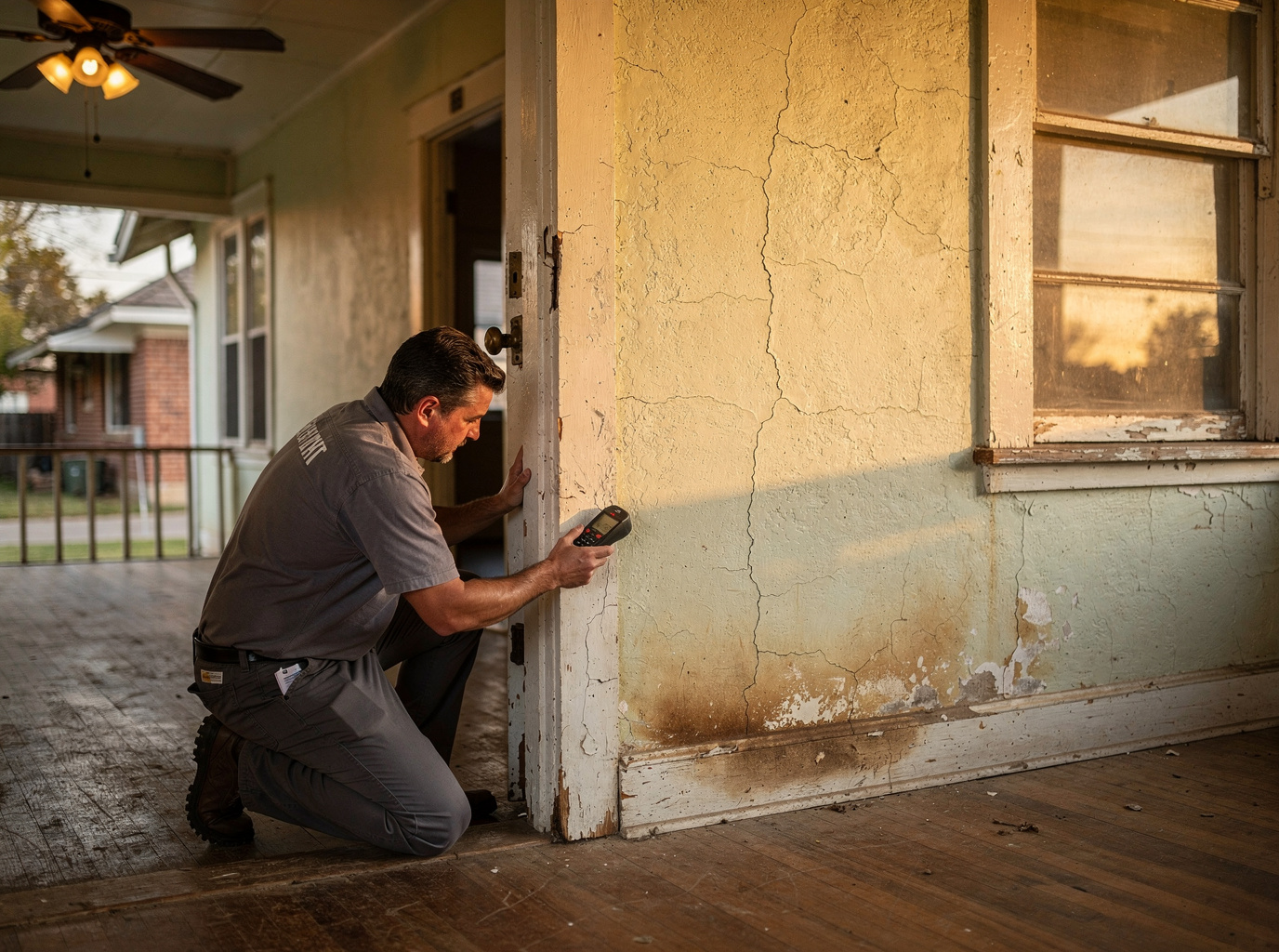
Spotting hidden moisture in older San Antonio homes begins with checking for musty odors near baseboards and slight buckling in hardwood floors, especially in structures built before 1950 in King William and Alamo Heights. These signs appear because many homes in Bexar County rely on original galvanized pipes that corrode over decades, allowing slow leaks to migrate into wall cavities without visible puddles. Hot summers accelerate evaporation that leaves behind mineral stains, while mild winters keep humidity levels high enough to sustain mold growth behind surfaces. Downtown and Southtown properties near the River Walk face added risks from occasional high water tables that push dampness upward through foundations. Regular visual sweeps combined with simple touch tests on walls reveal temperature differences that indicate trapped water.
Checking Aging Plumbing in King William Homes
Homes in King William often feature cast-iron and galvanized lines installed in the 1920s and 1930s that develop pinhole leaks at joints after repeated expansion from summer heat. Run water at multiple fixtures while listening for drips inside walls or watching for sudden pressure drops. Feel along pipe chases in bathrooms and kitchens for cool spots that stay damp longer than surrounding plaster. In these older builds, moisture frequently travels downward along studs before pooling near the foundation, creating soft spots in subfloors that creak underfoot. Checking crawl spaces or basements during mild winter months shows whether soil remains saturated near the structure, a common condition in Bexar County clay soils. Early detection here limits the scope of any needed Water Damage Repair work.
How Local Climate Affects Moisture Patterns
San Antonio's hot summers drive rapid drying on exposed surfaces while trapping vapor inside wall assemblies of older homes. The temperature swings cause wood framing to expand and contract, opening small gaps around windows and doors that allow humid air to enter. Mild winters keep relative humidity elevated, preventing full evaporation of any water that has already soaked into lath and plaster. Properties near the San Antonio Zoo or along the River Walk experience additional condensation on cooler north-facing walls during overnight temperature drops. These patterns mean homeowners should inspect attics and exterior walls after any heavy rain rather than waiting for visible ceiling stains. Handling Water Damage After Heavy Rains in San Antonio explains seasonal timing in more detail for Bexar County residents.
Practical Detection Steps for Southtown and Downtown
Begin by scanning ceilings with a bright flashlight at different angles to catch hairline cracks or water rings that form above older light fixtures. Use a moisture meter on baseboards and window sills in living areas, noting readings above 15 percent that signal hidden dampness. Move furniture away from exterior walls in Southtown bungalows to check for efflorescence on brick foundations, a sign of rising moisture common in the area's limestone soils. In Downtown apartments converted from early commercial buildings, inspect around original cast-iron drains that may have shifted with settling. Document any musty smells strongest in the morning when indoor humidity peaks. These steps help distinguish normal aging from active leaks before they require Water Damage Restoration.
Knowing When Professional Assessment Helps
When meter readings stay elevated after several days of dry weather or when multiple rooms show temperature differences on the same wall, contact a local team familiar with Bexar County construction. Older homes in Alamo Heights often need targeted drying behind intact plaster rather than full demolition. Water Damage Repair crews experienced with these neighborhoods can map moisture migration using infrared tools without unnecessary wall removal. Review What Influences Water Damage Restoration Costs Locally to understand factors such as access to hidden cavities in historic structures. Addressing issues promptly keeps damage contained to the original leak path rather than spreading through interconnected framing typical in pre-1960 San Antonio housing.