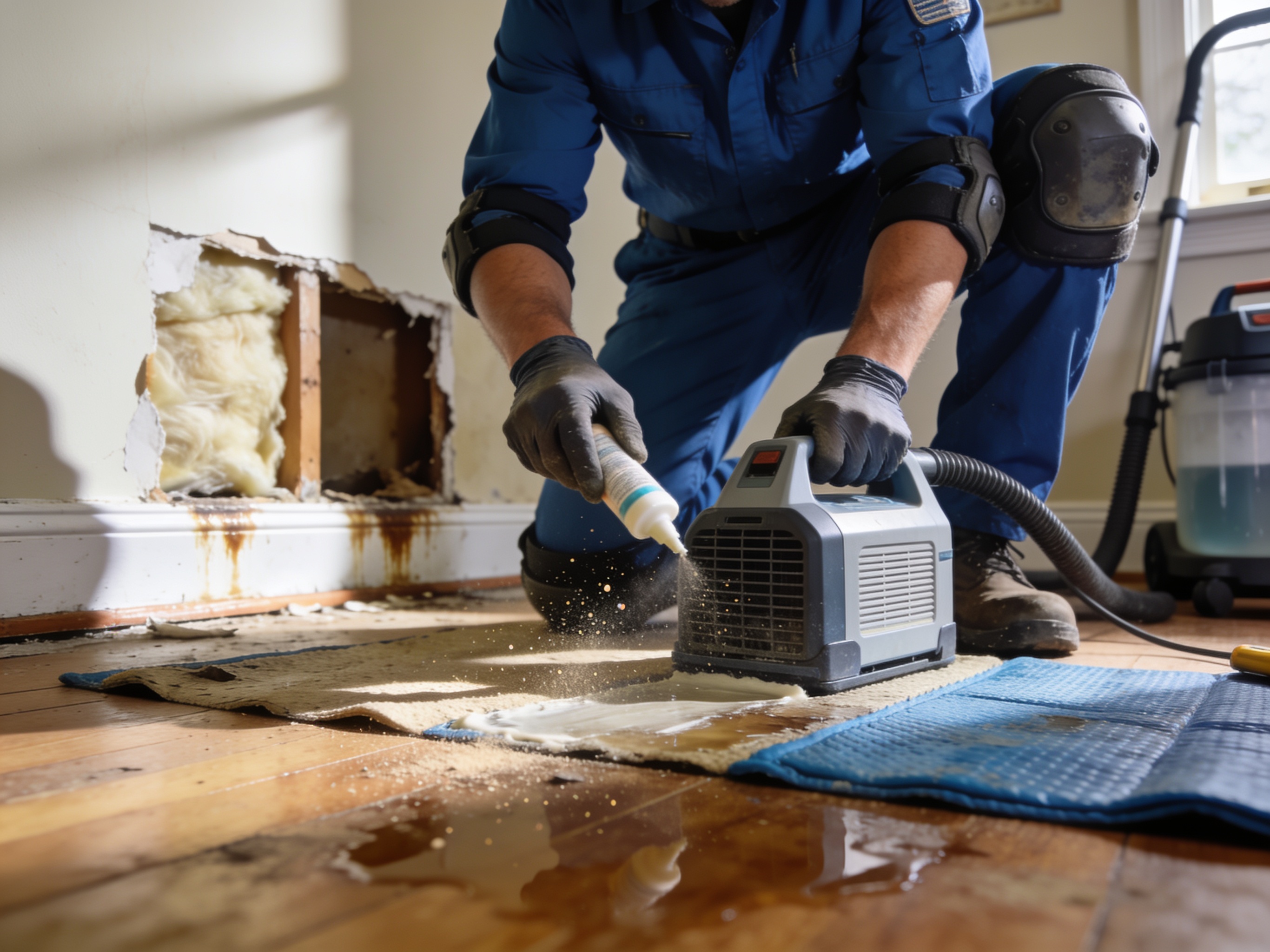
San Antonio’s older housing stock in King William and Southtown often features plaster walls and pier-and-beam foundations that trap moisture after even small leaks. Hot summers drive high humidity that slows natural drying, while mild winters let hidden water linger behind baseboards without freezing to signal the problem. Technicians working these neighborhoods routinely pull baseboards and drill weep holes in lath-and-plaster to confirm moisture levels before any drying equipment is placed.
Downtown and Alamo Heights properties sit on clay-heavy Bexar County soil that expands during heavy rains and pushes water toward foundations. River Walk area commercial buildings frequently experience backflow through old clay sewer lines after summer thunderstorms. Repair crews here prioritize negative-air containment and HEPA filtration because dust from 1920s-era plaster mixes with floodwater and creates airborne irritants that standard fans simply recirculate.
Mild winter temperatures mean dehumidifiers must run longer cycles than in colder climates to reach the 40–45 percent RH target required before new drywall or flooring can be installed. Homes near the San Antonio Zoo and in Southtown often have shallow crawl spaces with poor ventilation, so crews place air movers on the main floor while running separate drying systems below to prevent cross-contamination between levels.
Technician insight
In San Antonio the thing that catches most people out with water damage repair is the clay soil around Southtown and King William homes; it holds moisture against pier-and-beam foundations long after the rain stops, so a leak that looks minor on the surface often requires drying both the main floor and the crawl space at the same time.
Hidden moisture behind plaster in King William
A homeowner in King William called after noticing a soft spot near a 1940s bathroom. Inspection found water had traveled under the hardwood and wicked up into plaster walls. Crews removed baseboards, placed drying equipment in both the bathroom and crawl space, and monitored readings for six days until levels stabilized. The plaster was saved and only two boards of flooring needed replacement.
Water Damage Repair Services We Offer
✓Emergency Water Extraction
Rapid removal of standing water from living spaces and crawl spaces using truck-mounted pumps sized for Bexar County storm volumes.
✓Structural Drying and Dehumidification
Placement of commercial air movers and low-grain dehumidifiers to pull moisture from plaster, hardwood and subfloors common in Alamo Heights homes.
✓Drywall and Insulation Removal
Cut-out of saturated drywall and removal of fiberglass batts in King William and Southtown properties to prevent hidden mold growth behind walls.
✓Hardwood Floor Restoration
Cupped or buckled flooring repair in older Downtown and River Walk district buildings using targeted drying and board replacement techniques.
✓Crawl Space Water Mitigation
Pumping and vapor-barrier installation in pier-and-beam homes throughout Southtown where clay soil keeps moisture trapped year-round.
Water Damage Repair Cost in San Antonio, TX
| Service | Typical Range | What Affects It |
|---|---|---|
| Water extraction and initial drying setup | $350–$850 | Higher in multi-story or crawl-space homes common in King William |
| Drywall and insulation removal | $200–$600 | Depends on linear feet and whether plaster versus drywall |
| Full structural drying package | $400–$1,200 | Extended run times required by San Antonio summer humidity |
| Hardwood floor drying and repair | $500–$1,500 | Varies with square footage and age of flooring in historic districts |
Ranges are typical for San Antonio, TX and confirmed with an exact written quote before any work starts.
How it works
- 1
On-Site Moisture Assessment
Technician uses moisture meters and infrared cameras to map affected materials in the specific construction type found in the neighborhood.
- 2
Water Removal
Standing water is extracted and any contaminated material is removed to stop further migration into adjacent rooms or lower levels.
- 3
Drying And Monitoring
Equipment is staged and daily moisture readings are logged until drywall, subfloors and framing reach manufacturer-specified dryness levels.
- 4
Sanitation And Reset
Antimicrobial treatment is applied where needed and the space is prepared for reconstruction or homeowner return.
Pricing
Upfront written quotes provided after inspection; final cost depends on extent of hidden moisture and materials affected.