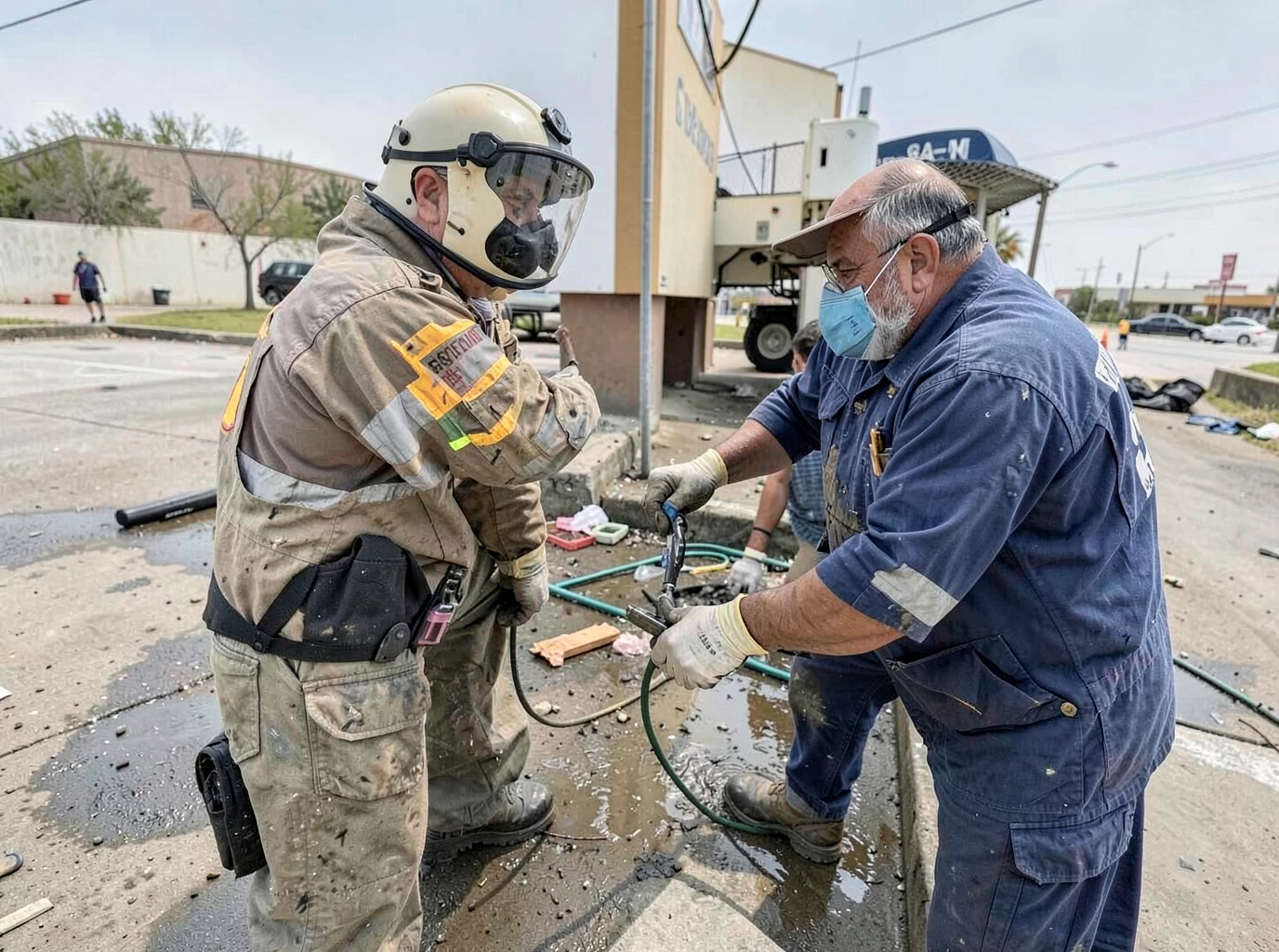
San Antonio summers push humidity high enough that standing water in a King William Victorian can turn into active mold growth within 48 hours. Older plaster walls and pier-and-beam foundations common in Bexar County trap moisture under floors, so crews must pull baseboards and run air movers under the structure rather than just drying the surface. Mild winters keep groundwater levels elevated near the River Walk, which means slab leaks in Downtown condos often migrate into neighboring units before homeowners notice.
Extraction equipment must handle both sudden flash floods from summer storms and slow leaks from aging galvanized pipes in Alamo Heights. Technicians check for hidden saturation in Southtown bungalows by using moisture meters on brick veneer and checking the crawl space, because the clay soils here expand and contract, creating new entry points for water each season. Proper drying prevents secondary damage to original hardwood floors that many local homes still retain.
Restoration includes removing affected drywall up to the moisture line, treating with antimicrobial agents, and reinstalling insulation that meets current Bexar County energy codes. Crews document every step with photos because insurance adjusters in San Antonio require proof that hidden areas were addressed before approving full payment.
Final walkthroughs focus on verifying that relative humidity inside the home has returned to the 45-55 percent range typical for this climate, which stops new mold colonies from forming on the River Walk side of a property where airflow is restricted by neighboring buildings.
Technician insight
In San Antonio the thing that catches most people out with water damage restoration is how fast mold takes hold behind plaster in King William homes once summer humidity hits the damp clay soil; homeowners often stop at surface drying and end up with hidden rot under the same floors six months later.
Slow Leak in Alamo Heights
A homeowner noticed staining on a dining room ceiling after a mild winter rain. Inspection found a roof flashing leak that had saturated insulation and joists above a plaster ceiling. Extraction and targeted drying prevented spread into the attic; affected sections were replaced and the ceiling refinished to match the rest of the 1920s home.
Water Damage Restoration Services We Offer
✓Emergency Water Extraction
Rapid removal of standing water from floods or appliance failures using truck-mounted pumps before it reaches neighboring properties in dense Southtown blocks.
✓Structural Drying and Dehumidification
Placement of industrial air movers and dehumidifiers to pull moisture from plaster, subfloors and pier-and-beam spaces common in King William homes.
✓Mold Remediation After Water Damage
Containment and removal of mold that develops quickly in San Antonio's humid summers when water sits behind walls in Alamo Heights residences.
✓Carpet and Flooring Restoration
Cleaning, drying and reinstallation of hardwood and tile floors damaged by leaks in older Downtown buildings with limited access points.
✓Ceiling and Wall Water Damage Repair
Cutting out saturated drywall, treating cavities and matching finishes in Southtown and King William homes to restore original architectural details.
Water Damage Restoration Cost in San Antonio, TX
| Service | Typical Range | What Affects It |
|---|---|---|
| Emergency Extraction | $400–$900 | Higher in multi-story Downtown buildings with limited access |
| Full Structural Drying | $800–$2,200 | Depends on square footage and pier-and-beam vs slab construction |
| Mold Remediation Add-On | $1,200–$3,500 | Triggered when humidity allows growth behind walls in summer |
| Flooring And Drywall Replacement | $1,500–$4,000 | Varies with material type and original trim matching in historic districts |
Ranges are typical for San Antonio, TX and confirmed with an exact written quote before any work starts.
How it works
- 1
On-Site Assessment
Technician inspects affected areas in the specific neighborhood, maps moisture with meters and identifies hidden paths water took through Bexar County soil or older plumbing.
- 2
Water Extraction
Remove standing water and saturated materials before humidity spikes from summer heat turn the job into a larger mold issue.
- 3
Drying And Monitoring
Run drying equipment for several days while logging moisture readings until levels match the dry standard for local construction types.
- 4
Restoration And Repairs
Replace damaged drywall, insulation and flooring, then verify the structure is dry and ready for final finishes.
Pricing
Pricing varies by water volume, access in older homes and whether hidden mold is discovered during drying.