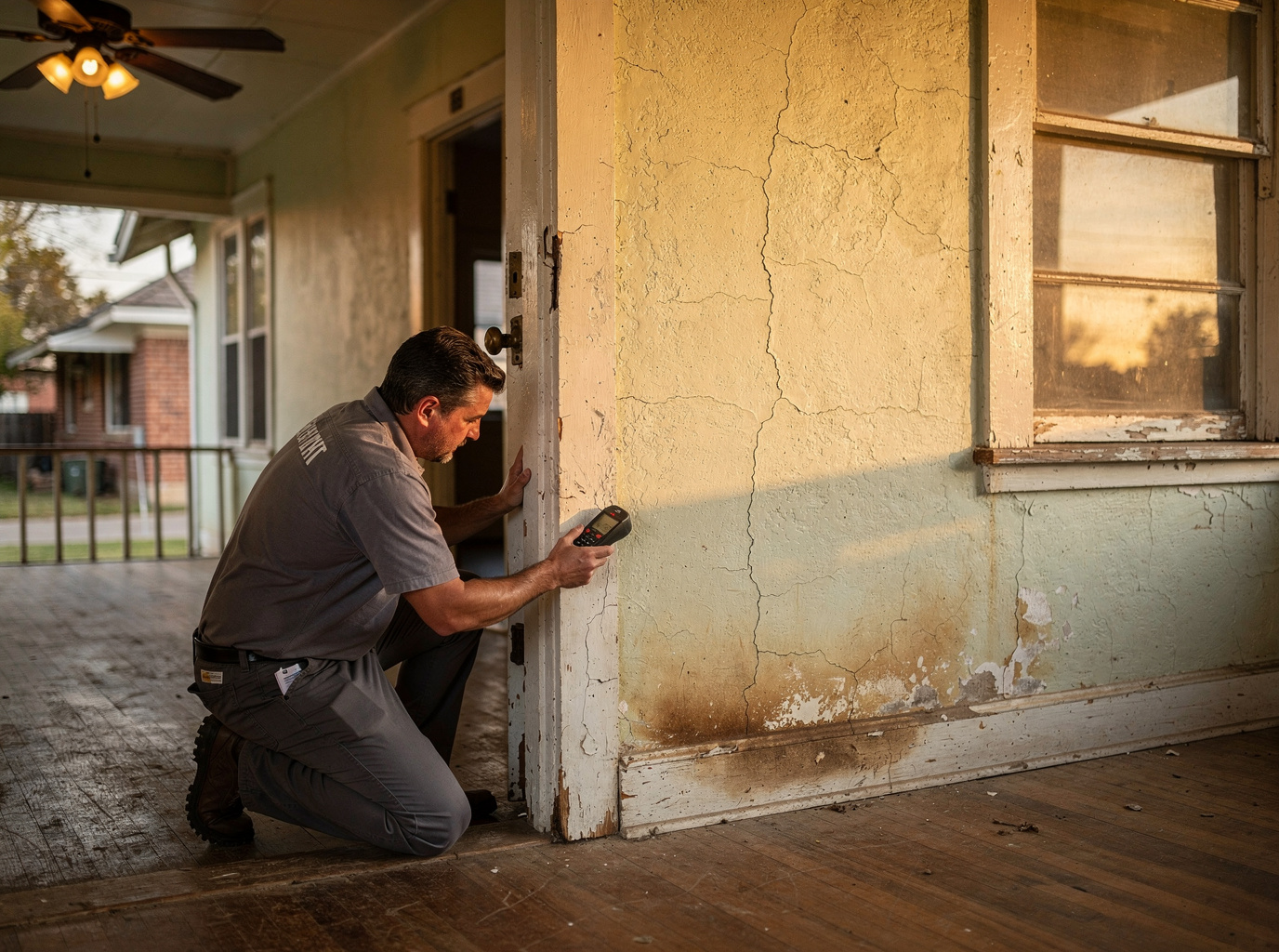
Marion sits just north of downtown San Antonio with a mix of early 1900s bungalows and mid-century homes on smaller lots. When pipes burst or roofs leak during summer storms, water moves quickly through pier-and-beam foundations and into the narrow crawl spaces common here. Our crew reaches these streets fast from our College Street base, bringing extraction equipment sized for tight driveways and older plumbing runs.
Hot Bexar County summers speed up mold growth once moisture sits in wall cavities or under hardwood floors. Mild winters still bring occasional freezes that crack older galvanized lines in Marion homes. We focus on targeted drying behind plaster walls and under original flooring so residents can stay in place while work continues. Every job starts with a walk-through that notes lot slope and how water drains toward the street or alley.
Access matters on these blocks. Some homes back up to the San Antonio River tributary channels while others sit close to busy corridors like San Pedro Avenue. We stage equipment on the street without blocking narrow rights-of-way and use moisture mapping to keep repairs limited to affected rooms only.
Around Marion
We regularly work near:
- 📍San Pedro Park
- 📍Marion Street
- 📍San Antonio College
- 📍Woodlawn Lake Park
- 📍Jefferson High School
Water Damage Restoration in Marion — Local Notes
- •Many Marion homes have pier-and-beam foundations with low crawl spaces that trap water after heavy rain; we use short extraction wands and small dehumidifiers to reach these areas without major demolition.
- •Narrow lots and alley access mean our vans park on the street; we carry lightweight portable equipment that fits through side gates and around mature trees common on these blocks.
- •Older galvanized and cast-iron lines in pre-1950 homes often fail at joints during temperature swings; we isolate leaks at the meter before drying begins to prevent repeat calls.
- •Summer heat and humidity in Bexar County push mold growth within 48 hours; we run air movers and dehumidifiers on a 24-hour cycle and check moisture readings twice daily until levels match unaffected rooms.