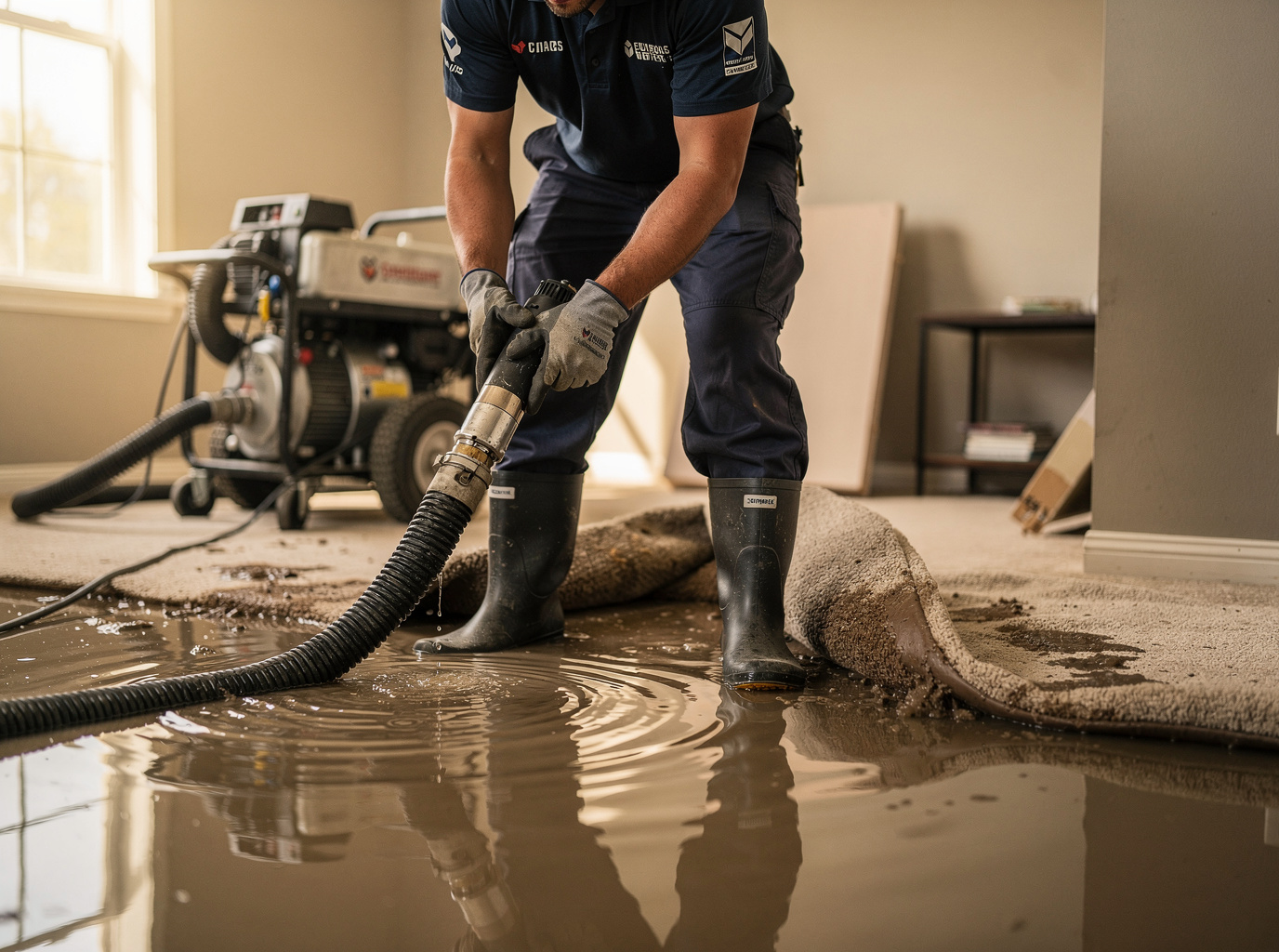
In Bexar County older housing stock in King William and Southtown often features plaster walls and pier-and-beam foundations that trap water quickly after a pipe burst or heavy rain. Hot summers increase AC condensate line failures while mild winters still bring occasional freezes that crack lines in uninsulated Downtown buildings. Technicians must pull baseboards early and use moisture meters on brick and adobe to locate hidden moisture before mold sets in.
River Walk and Alamo Heights properties sit on clay-heavy soils that hold water against foundations longer than sandy areas, so extraction crews stage pumps on the street side and run hoses through alleys to avoid damaging historic landscapes. Standing water in crawl spaces under 1920s homes can wick into floor joists within hours, requiring targeted removal rather than whole-house drying setups that waste time and equipment.
San Antonio code requires proper disposal of extracted water when sewage is involved, so crews separate gray and black water on site and document volumes for Bexar County health reports. Edge cases include multi-story buildings near the River Walk where water migrates through shared walls, demanding coordinated access with neighboring units before full drying can begin.
Technician insight
In San Antonio the thing that catches most people out with Emergency Water Removal is how quickly water travels through the lime-based plaster in pre-1950 King William and Southtown homes; once it hits the lathe it spreads behind baseboards faster than in newer drywall, so skipping the first 18 inches of wall often means hidden rot shows up weeks later.
Southtown Crawl Space Flood
Heavy rain sent water under a 1930s pier-and-beam home near Southtown. We found the water had wicked six feet along joists because the clay soil held moisture against the foundation. Portable pumps cleared the standing water, then we ran targeted drying under the floor for four days to reach dry standards without disturbing the original hardwood above.
Emergency Water Removal Services We Offer
✓Burst Pipe Water Extraction
Immediate pump-out and containment for copper or PVC line failures common in Alamo Heights homes built before 1970.
✓Storm Flood Extraction
Rapid removal of rainwater that enters through flat-roof leaks or low-lying entries in Southtown and King William during summer thunderstorms.
✓Sewage Backup Removal
Safe extraction and separation of contaminated water from older clay sewer lines that serve many Downtown and near-River Walk properties.
✓AC Condensate Emergency Removal
Targeted drying after summer condensate line clogs that flood attics in single-story Bexar County homes without visible exterior damage.
✓Crawl Space Water Extraction
Pump and dehumidify standing water under pier-and-beam homes in Southtown where clay soil keeps moisture against joists for days.
Emergency Water Removal Cost in San Antonio, TX
| Service | Typical Range | What Affects It |
|---|---|---|
| Standard room extraction | $250–$550 | Varies with carpet vs hardwood and whether subfloor is exposed |
| Crawl space pump-out | $400–$800 | Higher when clay soil and limited access points are involved |
| Sewage-contaminated removal | $600–$1,200 | Includes separation, disposal fees and extra PPE time |
| Multi-story migration job | $800–$1,600 | Common in Downtown buildings with shared walls |
Ranges are typical for San Antonio, TX and confirmed with an exact written quote before any work starts.
How it works
- 1
On-Site Assessment
Technician arrives within the service window, maps water migration through San Antonio home construction types, and identifies salvageable versus saturated materials.
- 2
Containment and Extraction
Set up barriers to protect unaffected rooms, then use truck-mounted and portable pumps to remove standing water from floors and crawl spaces.
- 3
Moisture Mapping
Deploy meters and infrared cameras to locate hidden water in walls, subfloors and insulation common in King William and Downtown structures.
- 4
Initial Drying Setup
Place air movers and dehumidifiers sized for the square footage and Bexar County humidity levels, then schedule daily monitoring visits.
Pricing
Pricing depends on water volume, access difficulty and whether sewage is present; upfront quotes provided after assessment.